
More than 50 years of experience in thermal equipment
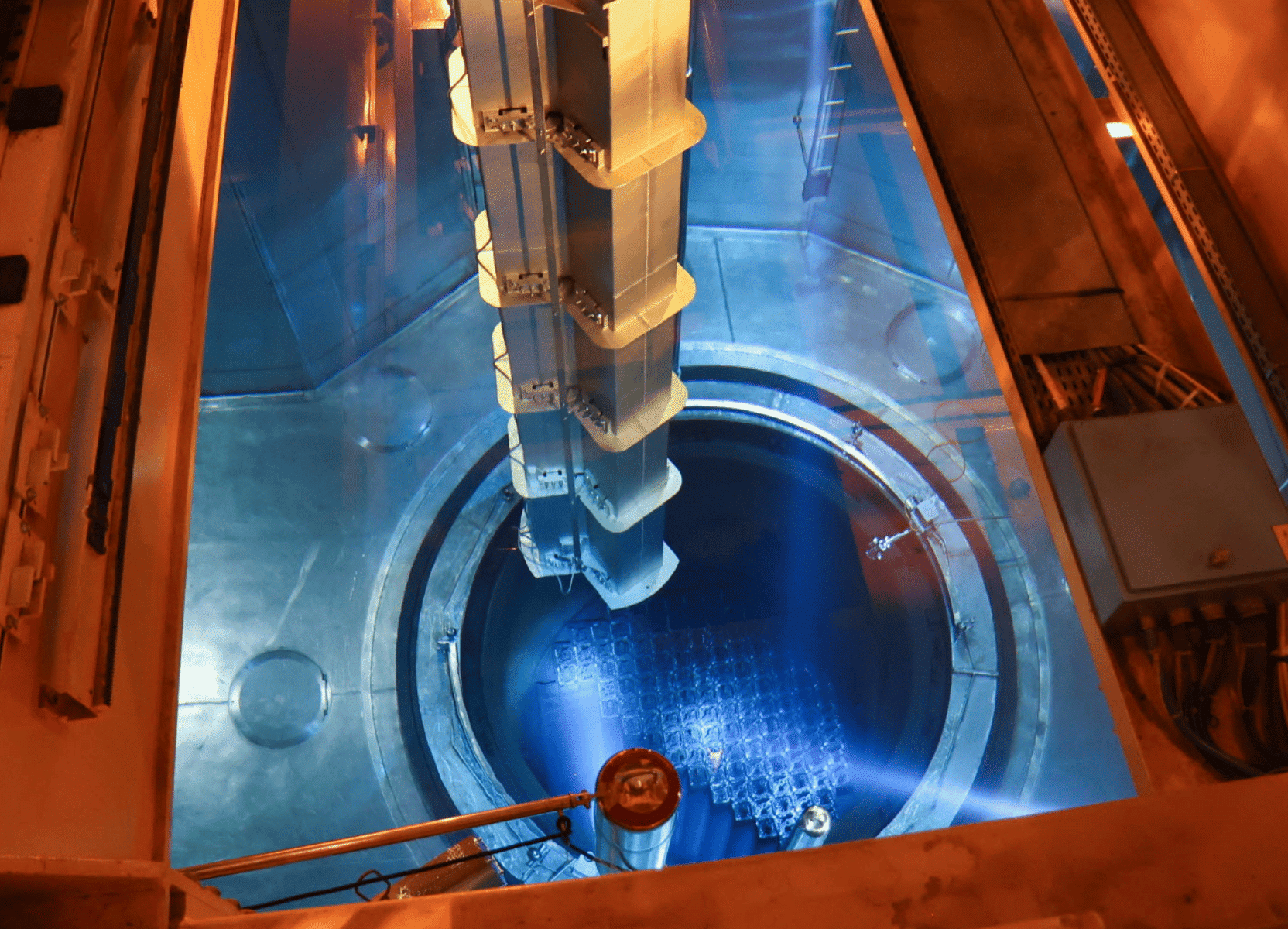
The nuclear sector brings together research and industry to develop and manufacture fuel and fuel cladding, as well as to design reactor technologies for the existing fleet and future nuclear programmes — EPR2, SMRs and innovative reactors. It also studies the behaviour of the materials used in reactor vessels, coolant circuits and internal structures, under normal operating conditions, during irradiation or in the event of accidents, particularly in the event of a loss-of-primary-coolant accident (LOCA). In addition to these activities, the sector encompasses research reactors and facilities dedicated to defence, the production of medical radioisotopes, and the irradiation and qualification of fuels, materials and components. Finally, the sector covers the processing and recycling of nuclear materials, the management and conditioning of radioactive waste, right through to the decontamination and decommissioning of facilities.
In several of these areas, thermal processes are involved in the preparation and processing of materials, thermal treatments, high-temperature characterisation of irradiated and non-irradiated materials, as well as in certain processes for the treatment, recycling and recovery of radioactive waste. Their implementation requires furnaces suited to the temperatures, atmospheres, working environment, nature of the materials being processed and the integration constraints specific to nuclear facilities.
For over 50 years, the AET Group has been supporting major players in the civil and military nuclear sectors with their research, testing, technological development and production projects. This experience is underpinned by a safety culture deeply ingrained within our teams and by our ability to design equipment suited to the most demanding environments. Our internal processes incorporate the technical, documentation and organisational requirements specific to nuclear projects:
Our expertise also extends internationally, with projects already completed in the United Kingdom, Germany, Italy, the United States and elsewhere. For each project, our teams adapt to local regulatory requirements whilst maintaining the same high standards of quality and safety.

At the heart of the reactor, the fission reactions taking place in the fuel release the heat used to generate energy. Its design directly influences the reactor’s performance and safety, as well as the use of resources and the management of materials resulting from the nuclear fuel cycle. Research programmes aim, in particular, to improve its robustness, extend its service life within the reactor and increase the energy it can provide, whilst preserving the integrity of the cladding, which acts as the primary containment barrier for radioactive materials.
These developments address different needs depending on the application: maintaining and optimising fuel for the PWR fleet, preparing for the requirements of the EPR2 and various SMR designs, supporting experimental or propulsion reactors, and developing fuels suited to innovative reactors. Material recycling is also a strategic priority: the use of MOX fuel enables some of the plutonium from spent fuel to be utilised and, in France, helps to save around 10 per cent of natural uranium. In the longer term, research into fast neutron reactors aims to make better use of uranium resources and to further develop the recycling of nuclear materials.
These programmes give rise to new requirements for the production, conversion and processing of nuclear fuels and materials. Depending on the application, sintering, calcination, drying, melting, distillation, pyrolysis and heat treatment require equipment suited to the properties of the materials being handled, the volumes processed and the specific constraints of each facility.
For over 50 years, AET Technologies has been supporting organisations in the civil and military nuclear sectors with operations across the entire fuel cycle, from upstream to downstream. Our expertise in standard and bespoke furnaces helps to ensure process safety and maintain industrial control over strategic equipment for current and future nuclear programmes.
From laboratory equipment to production facilities, AET Technologies designs standard and bespoke furnaces for applications relating to nuclear fuels. Our certifications and our expertise in the specific requirements of the nuclear industry enable us to meet the specifications of each project.

(1) Glove box (GB) nuclear fuel sintering furnace
(2) Nuclear fuel sintering furnace
(3) UO₂ powder drying and calcination furnace
(4) Horizontal multi-process universal tube furnace with exhaust gas analysis option
(5) Nuclear fuel fabrication furnace in a shielded cell, 1800 °C
Hot mechanical characterisation enables the measurement of changes in the strength, deformation and damage of materials under the influence of temperature, mechanical stresses, irradiation and the environment. Carried out on irradiated (‘hot’) or non-irradiated (‘cold’) materials, tensile, creep, fatigue, bending and compression tests provide the data required to establish behaviour models, perform design calculations and compile qualification and safety dossiers.
Tests carried out on non-irradiated materials make it possible to establish a baseline, to develop new materials or new manufacturing processes, and to prepare experimental protocols. Comparison with the results obtained after irradiation then makes it possible to assess how mechanical properties change as a result of irradiation and ageing. Depending on their radioactivity and the risk of contamination, irradiated materials may require equipment designed for remote operation within shielded cells or other suitable containment enclosures.
In the nuclear sector, high-temperature mechanical tests may be carried out on materials used in fuel cladding, the reactor vessel, internal structures and certain components of the primary and secondary circuits. These tests help to qualify materials and components, assess their ageing, justify the extension of a plant’s operating life and verify their behaviour under normal, incident, accident or storage conditions. They also support the development of materials intended for future reactors, which will be subject to new temperature, irradiation and operating conditions.

(1) TCN creep testing machine (1100 °C or 1500 °C), 20 to 50 kN
(2) Test rig for creep and fatigue testing under high pressure (800 bar) and high temperature
(4) 1200 °C and 1800 °C furnaces for compression testing
(5) 1260 °C single-zone/multi-zone lamp-heated furnace with opening for tensile and fatigue testing
(6) 1500 °C tubular furnace with hot-jaw opening for tensile and fatigue testing
AET Technologies is one of a very select group of manufacturers capable of producing mechanical testing equipment designed to characterise irradiated materials in a shielded cell. The design of such equipment must meet the specific requirements of these environments: limited installation space, manipulator arms, contamination control, minimisation of maintenance interventions and compatibility with equipment already installed in the cell.
In addition to new equipment, we have already carried out several retrofit projects in shielded test cells: refurbishment of the thermal and control-command systems for mechanical testing machines, as well as the modernisation of the control systems for pendulum impact testers. These projects have improved control and data acquisition, extended the service life of the equipment and reduced the need for major operations in confined spaces. They have therefore spared our clients the substantial investment that a complete replacement of their installations would have entailed.

(1) 1100 °C single-zone/multi-zone tubular furnace (ADAMEL type) in a shielded chamber
(2) 1300 °C creep furnace (ADAMEL type) in a shielded chamber
(3) 1300 °C universal swing-door furnace for mechanical testing in a shielded chamber
(4) 1200 °C and 1800 °C furnaces for compression testing in a shielded chamber

In addition to mechanical testing, nuclear research and production utilise thermal equipment to develop, process or apply controlled cycles to various materials. For non-irradiated materials, this work may involve, in particular, melting, heat treatments or the development of high-temperature multiphysical processes. AET Technologies designs equipment tailored to the experimental objectives, temperature ranges, atmospheres and operating conditions specific to each project.

(1) Horizontal multi-process universal tube furnace with exhaust gas analysis option
(2) Lamp furnace for simulating APRP conditions for nuclear fuel cladding
(3) Single-chamber multi-process furnace up to 1,600 °C for R&D and nuclear production
Where the materials being handled require containment, the furnace must be designed to integrate fully into a glove box. Its design must therefore take into account the dimensions and interfaces of the enclosure, temperature and atmosphere control, connection to utilities, effluent management where required, as well as loading, unloading and maintenance operations. These projects are generally bespoke developments, tailored to very specific processes and facilities.

(1) Multi-zone pit furnace + reactor up to 1000°C (glove box compatible)
(2) Multi-zone pit furnace up to 1250°C in a glove box
(3) Glovebox 850°C Rapid Thermal Process and surface treatment
(4) Oxidizing-process laboratory furnace mounted in a glove box (GB)
For heavily irradiated materials, where the activity level necessitates biological protection, thermal processes must be carried out remotely within a shielded chamber. The design of the equipment must therefore balance thermal performance, compactness, remote operation, contamination control and the minimisation of manual intervention. AET Technologies develops these solutions by taking into account, right from the design phase, the existing environment and future operating conditions.

(1) 1800 °C nuclear fuel fabrication furnace in a shielded chamber
(2) Nuclear-rated melting furnace up to 2200 °C
Nuclear activities and decommissioning produce waste of very different types, activity levels and half-lives. As soon as it is produced, it is characterised, sorted and channelled into appropriate processes for treatment, conditioning, interim storage and final disposal. At the same time, the sector seeks to minimise waste generation and recover substances or materials that can be reused, whilst controlling contamination, effluents and secondary waste.
Depending on their nature, waste may be subjected to various thermal treatments. Metallic waste, for example, can be treated by smelting, whilst solid organic waste, such as polymers and elastomers, may undergo pyrolysis or incineration. Low-level aqueous effluents can be treated by evaporation to separate the distillates from the radioactive concentrates, which are then stored and cemented in preparation for disposal. High-level waste resulting from the processing of spent fuel is, for its part, incorporated into a borosilicate glass matrix to ensure its long-term containment.
Within the fuel cycle, research also aims to improve the separation of recoverable materials from residues intended for storage and to enhance their conditioning. Processes for sorting, treatment, recycling and vitrification are thus progressing in parallel with decommissioning programmes. The long-term objective of the nuclear sector is to limit the production of final waste, reduce its volume and condition it in a form that is stable over the long term.
AET Technologies supports major players in the sector in the development of thermal processes for the sorting, treatment, recycling and recovery of radioactive waste. Each piece of equipment is bespoke, designed according to the process to be implemented, the nature of the waste, the required temperatures and atmospheres, and the specific constraints of the nuclear facility.

(1) Molten salt distillation equipment
(2) 1200 °C post-combustion chamber
(3) 2000 °C pit furnace, under vacuum and in a controlled atmosphere
(4) Chamber furnace for the study of borosilicate vitrification glasses